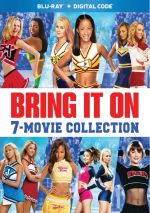
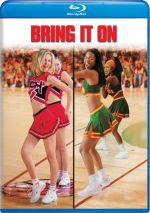
Reviewed by Colin Jacobson (May 24, 2026)
Some movies make a strong artistic statement. Some go out on a limb and attempt to do something different and bold. Some want to comment on the world in which we live and enlighten their audiences.
And some movies just wanna have fun, and 2000’s Bring It On clearly falls into that category. It reinvents no wheels and doesn’t try to be anything more than it is: a frothy and bouncy little look at the world of competitive cheerleading.
The story follows Torrance (Kirsten Dunst), the newly-appointed captain of the five-time national champion cheerleading squad at San Diego’s Rancho Carne High School. The pressure’s on for her to bring home another trophy, and she falters in her early attempts, though she is able to recruit a tough new cheerleader in gymnastic-buff Missy (Eliza Dushku).
Matters complicate when Missy points out to Torrance that the squad’s former captain Big Red (Lindsay Sloane) stole routines from a predominantly Black school in a town near LA. This sets up a rivalry between lily-white Rancho Carne and the Clovers of East Compton, who also boast an excellent team led by Isis (Gabrielle Union).
Note that my movie comments will initially reproduce what I thought about Bring when I first saw it 25 years ago. I’ll add updated feelings at the end of the film discussion.
As I already mentioned, Bring It On doesn’t exactly deliver an original piece, especially since a slew of other cheerleader-related movies hit screens around the same time. However, although it verges on parody at times, Bring becomes the only one to treat the subject with any remotely serious tone, and it succeeds in showing the art and excitement of cheerleading.
That doesn’t mean it turns into a showpiece for the form, as it mainly exists to provide another teen diversion. Nonetheless, the film becomes a fun piece executed in a manner that flirts with excess and absurdity but that manages to keep enough of a foot in reality to turn entertaining.
Much of this results from the exuberant direction of Peyton Reed. He sees cheerleading for the flashy show it is and he brings out the best in the visual areas.
Bring fares nicely when it depicts the squads at work. Some strong choreography and fine staging makes these scenes surprisingly vibrant.
The actors clearly help as well, and Dunst neatly inhabits perky Torrance. However, she never lets the role degenerate to the role of stereotype, as she makes Torrance bubbly and believable as a cheerleader but also adds depth to her.
Dushku also provides nice work as tough-girl Missy, even though it seems hard to be tough with a name like tha. She aptly switches from riot grrl to cutesy cheerbabe without much effort, and I accepted the character’s changes and moods as realistic.
As Missy’s brother and Torrance’s prospective love interest Cliff, Jesse Bradford actually provides a fairly believable New Wave boy. It’s often hard for kids today to pull off that kind of rock attitude, but Bradford has a scruffiness that makes him endearing. His charm actually let me ignore the fact that physically, he was born to play the lead in The Donny Osmond Story.
While Bring features some apparently gratuitous scenes - we find a girls’ locker room sequence and a bikini car wash - Reed manages to stage these in such a way that felt more like homages to early films in the genre than simple exploitation. Granted, I may not be the most objective party to judge this issue.
Though I may feel like a dirty old man, I have to admit that such scenes were rather… uh… interesting. And let the record note that the male cheerleaders also participate in the car wash, though for some strange reason, they don’t receive quite as much screen time as the women.
Actually, I like the way the movie treated the subject of male cheerleaders. It demonstrates how others look down on them, mainly due to their suspect sexuality.
However, the film accepts openly gay Les (Huntley Ritter). It also shows exceedingly-straight - and unapologetic – cheerleader Jan (Nathan West).
The subject of gay male cheerleaders sets up some of the movie’s better gags, such as a scene in which a couple of jocks see Jan as he works out with one of the women. They stretch together in a rather intimate manner, and one indicates that they should consider joining the squad.
To that the other responds with a homophobic slur. Irony results because this attitude ignores the fact that male cheerleaders get to spend much of their time handling the bodies of extremely attractive young women.
One would think more guys would recognize that interest in stereotypically girlie things might get them more opportunities to touch girls, but I guess the taint seems too intimidating. Sure, male cheerleaders get lots of access to hot females but their guy peers would still disapprove.
In general, I found Bring It On to provide a surprisingly fun and entertaining experience. It suffers from some of the clichés of all teen flicks, but through its direction and acting it manages to seem spunky and energetic enough to make me forgive those flaws.
No, it’s not Citizen Kane, but it never aspires to that level. The movie sets out to give you 99 minutes of chipper charm and it largely succeeds.
Thus concludes my early 2001 view of Bring It On. What changed when I saw it 25 years later?
Mostly I witnessed a crude side that didn’t stand out to me back then. The level of homophobia seems more prominent than I recalled, and we get some other questionable moments.
For example, one of the straight male cheerleaders uses his gig as a way to stick his fingers in places they don’t belong. In 2001, this seemed cheeky and funny, but in 2026, it comes across as highly inappropriate at best and a form of rape at worst.
The late 1990s and early 2000s really was a hotbed for comedies with high levels of homophobia and misogyny, but somehow, it all seemed normal and amusing back then. Indeed, Bring It On felt downright progressive in the way it treated its gay male roles.
I think Bring It On still feels light and charming enough to work more than 25 years after its initial release. Nonetheless, I found it more difficult to go with the flow because its less than tasteful moments stood out so much circa 2026.