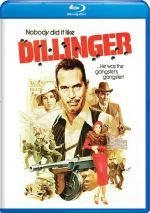
Reviewed by Colin Jacobson (February 18, 2026)
A staple of Hollywood since at least the 1930s, the gangster genre prospered in the 1970s via the huge commercial and critical success of 1972’s The Godfather and 1974’s The Godfather Part II. However, those classics didn’t stand alone, and 1973’s Dillinger provides another effort in that vein.
In 1933, John Dillinger (Warren Oates) stands as “Public Enemy Number One”. He leads his gang through a series of violent bank robberies.
When one of these leads to the death of law enforcement officers, FBI Agent Melvin Purvis (Ben Johnson) dedicates himself to the eradication of the Dillinger threat. Dillinger continues his illegal ways while he attempts to evade capture.
Clearly the truth behind this movie’s events offers a great story but if you want a fine movie about Dillinger, you'll need to look elsewhere. This 1973 effort that bears his last name becomes mediocre at best and silly at worst.
Directed and written by John Milius - best known for his work as screenwriter of 1979’s Apocalypse Now and writer/director of 1982’s Conan the Barbarian - Dillinger offers a disjointed and messy
depiction of the gangster's career. The story lacks cohesion and tends to jump from event to event with alacrity.
Milius makes some token attempts to develop the characters, mainly through Dillinger's romance with prostitute Billie Frechette (Michelle Phillips). However, these efforts seem half-hearted and go nowhere.
I could excuse the film's jumpy transitions if one plot device its uses seemed more encompassing. Purvis narrates the tale, and if the movie
all came from his point of view, I think the disjointed observations of
Dillinger's actions would make more sense.
However, this doesn't become the case. We find events in which Purvis took part intermixed with many that he didn't witness so we find no consistency.
I find little els going for Dillinger either. The dialogue remains consistently inane and witless, and the characters feel thinly drawn.
Dillinger presents an extremely strong cast, as in addition to Oates, Johnson and Phillips, we also find Cloris Leachman, Richard Dreyfuss and Harry Dean Stanton among others. Unfortunately, virtually all of them come across as hammy and silly.
Milius displays some flair when it comes to the film's action sequences, but even those leave me cold. They seem overwrought and elongated and don’t live up to the needed thrills.
Ultimately Dillinger seems like nothing more than a cheap rip-off of 1967’s Bonnie and Clyde, a much better film about the gangsters of the 1930s. Ignore the long roster of talent associated with Dillinger because it lands with a thud.