Reviewed by Colin Jacobson (January 8, 2026)
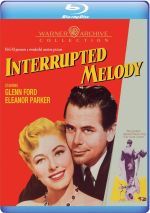
Hollywood likes biopics, especially if they include tragedy and the ability to overcome hardships. Into this genre falls 1955’s Interrupted Melody.
Based on a true story, soprano Marjorie Lawrence (Eleanor Parker) leaves her Australian home to take voice lessons in France. When she debuts with the Paris Opera, she becomes a smash sensation and star.
However, polio strikes and derails Marjorie’s career and health. With the help of devoted husband Dr. Tom King (Glenn Ford), though, Marjorie attempts a comeback.
Melody came out well within Lawrence’s lifetime. 48 years old during the shoot, she’d live 24 more years after the film’s creation.
I can’t help but suspect that this influenced the nature of the production. When a movie’s subject remains alive at the time, it seems likely that the filmmakers will avoid the “warts and all” that might become the case for a tale told after the person’s demise.
To add to this, Melody adapts Lawrence’s 1950 memoir of the same title. With a project taken from her own text, the possibility of objectivity vanishes.
Not that the Hollywood of 1955 appeared likely to give us an honest view of Lawrence’s life anyway. A movie like this exists for a superficial view of its characters and won’t want to provide real depth.
The question becomes whether or not Melody succeeds as the inspirational melodrama it aspires to provide. Unfortunately, this answer comes back as a resounding no.
It takes about 60 percent of Melody to get to Marjorie’s health issues, and the film rushes through these aspects of her life. We barely meet her family in Australia before she heads to France, and it then speeds through her career and relationship with Tom.
Sure, Melody does take an hour or so before tragedy strikes, but it comes with so many opera performances that it lacks the room it needs to develop its characters. We see an awful lot of Marjorie’s stage work - far too much, as we don’t need all these examples of her craft.
Perhaps I shouldn’t complain about all the screentime devoted to these unnecessary glimpses of Marjorie as singer. At least they distract from the relentlessly cheesy melodrama on display.
Once Marjorie gets sick, Melody works overtime to paint the conflicts and woes. These become downright comedic, a factor exacerbated by Parker’s ridiculous performance.
Parker channels her inner hummingbird and plays everything ultra-fast and ultra-absurd. Parker’s acting seems so broad and over the top that I can’t help but wonder if she tried to create a campy character.
This becomes more noticeable because Ford delivers a much more grounded piece of work. The two seem to exist in wholly different cinematic universes.
Perhaps I shouldn’t complain about Parker’s performance, as the unintentional laughs she provides become the only entertaining moments in Melody. A clumsy and overwrought melodrama, it scores points for the “so bad it’s good crowd” but no one else.