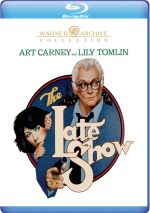
Reviewed by Colin Jacobson (June 1, 2026)
Perpetually best-known as Ed Norton on the TV classic The Honeymooners, Art Carney enjoyed a nice late-career revival in the 1970s, with his Oscar-winning turn in 1974’s Harry and Tonto the highlight. 1977 brought Carney another lead role via The Late Show.
Retired LA-based private investigator Ira Wells (Carney) gets a shock when his former partner Harry Regan (Howard Duff) arrives at his home. Injured with a bullet wound, Harry dies on the spot.
This prompts Ira to come out of retirement to solve the case. This eventually pairs Ira with Margo Sterling (Lily Tomlin), a quirky actress who employed Harry for what became his final assignment.
Given his generally avuncular and unassuming on-screen personality, Carney seems like an odd choice for a cranky old gumshoe whose glory days existed 30 or more years prior. Still, he does fine in the role and adds some depth to the part.
Would I prefer an aging veteran of those 1940s noir flicks to play Ira? Sure, though I don’t know what viable choices remained active in the latter part of the 1970s.
In any case, Carney accomplishes the role’s goals, though I find it a little disturbing to realize he was only 58 years old when he shot Late Show. I figured he was at least 15 years older, as he seems much closer to mid-70s than late 50s.
Based on the story, I assume Ira is supposed to be in his 70s. The film certainly doesn’t portray him like he might be younger.
Show brings an interesting “generation gap” collision of the elderly – I guess – detective who still behaves like he would’ve in his younger days and the flaky and oh-so-1970s Margo. While Ira often treats her like a traditional noir “dolly”, she doesn’t come across that way at all.
This contrast brings both humor and pathos to Late Show. The laughs stem from the inevitable discrepancy in how the two age groups view the world, but we also get some emotion due to the way in which Margo’s youth reminds Ira of his mortality.
While not truly a spoof of noir flicks, Show does toy with conventions. It gives us the logical conclusion of what a 1940s tough guy detective would be like in old age, especially given Ira’s resistance to change.
This feels like a clever concept for the genre. We find amusing juxtapositions like the way Ira conducts business during mundane activities like laundry.
All of this leaves us with a pretty solid mix of murder mystery and comedy. Late Show enjoys the way it winks at audience expectations but it remains serious enough to work both ways.