Reviewed by Colin Jacobson (December 18, 2025)
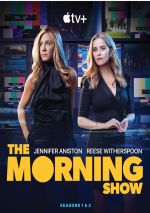
Back in 2000, Reese Witherspoon guest-starred on two episodes of Friends as the sister of series regular Rachel Green (Jennifer Aniston). Witherspoon and Aniston reunited as the co-leads of The Morning Show, an AppleTV+ series that debuted in 2019.
This package includes all 10 of Season One’s episodes. The plot synopses come from the series’ official website.
In the Dark Night of the Soul It's Always 3:30 in the Morning: “America's favorite morning news show is thrown into crisis when it becomes the news.”
Given the presence of Aniston and Witherspoon as the leads, one might expect Morning to focus on comedy. While it comes with some moments of levity, it instead leans more into the drama behind the scenario.
This seems like a workable choice, even though I tend to think that a series like this just uses the TV industry as a glossy setting for a mix of soap opera and behind the scenes politics. Nothing about “Soul” promises that Morning will detour from that conception.
Still, “Soul” provides an efficient enough opening episode, one that introduces its characters and overall narrative in a reasonably positive manner. “Soul” tilts overwrought and I hope it doesn’t present everything as life or death the rest of the way, but it still launches the series reasonably well.
A Seat at the Table: “Alex Levy (Aniston) engages in contract negotiations as she prepares to accepts an award. Bradley Jackson (Witherspoon) is courted for a new opportunity.”
As seen in “Soul”, Alex and Bradley meet when Bradley goes viral and Alex interviews her on TV. This sets up a dynamic of the two as differing personalities, with Alex a throwback to “classic news TV” and Bradley more a stand-in for “new media”.
This makes sense in terms of the series purpose and how it intends to generate sparks as it goes. However, it seems less logical thanks to the casting.
It feels like Bradley should offer a character substantially younger than Alex, and perhaps Morning wants us to view the situation that way. However, given Aniston is only seven years older than Witherspoon – and previously played sisters! – it becomes more difficult to see them as representative of separate generations.
Granted, “Table” attempts to address this to some degree, but the plot choice involved seems more like an attempt to tease the audience than to make real sense. At least based on the first couple episodes, I continue to feel an Alex/Bradley situation with a clear “generation gap” would make more sense for the series.
In any case, “Table” manages to push along the overall narrative in a mostly positive manner. We all sense where things may eventually go and I might feel a little impatient to get there, but the journey so far comes with enough intrigue to keep me engaged.
Chaos Is the New Cocaine: “In a weekend of turmoil, TMS scrambles to prepare for its new future.”
While the ending of “Table” led to Bradley’s inevitable selection as TMS co-host, I admit it got there in an unexpected manner. No spoilers, but I figured the show would take a different path to this unsurprising decision.
While the aftershocks of this event dominate “Chaos”, the rest feels somewhat scattershot. Actually, that trend shows up during the first two shows as well, as the series throws a lot at the screen.
As with those prior pair of programs, “Chaos” continues to keep us with it. However, the inconsistency means it doesn’t live up to its potential and it makes me less optimistic about how the rest of S1 will go.
That Woman: “TMS experiences severe growing pains as it embarks on a new era.”
On one hand, the cast of Show exists as a strength. In addition to Witherspoon and Aniston, the series involves Billy Crudup, Steve Carell and plenty of other “names” who pop up on a less consistent basis.
Unfortunately, it can feel like the various actors exist in different worlds. Aniston and Carell overact the drama and can’t shed their comedic roots, while Witherspoon seems unsure which way to go.
These performance choices mean that the series leans toward the melodrama I mentioned previously, as the acting accentuates a lack of reality. Not that I anticipated something that felt like a documentary here, but at least four episodes into Morning, matters feel too overblown for me to really embrace it.
No One’s Gonna Harm You, Not While I’m Around: “A looming article threatens to upend the TMS power structure.”
A better-executed Morning Show would focus on the Bradley/Alex relationship. In reality, though, the series seems a lot more interested in various soap opera elements.
I suspect the discussion of the scandal that brought Bradley to the TMS family continues mainly to keep Carell an active part of the narrative. It would make more sense for this simply to have been a preamble to a first season that concentrates mainly on the Bradley and Alex stuff.
“Harm” follows these less than intriguing threads. The same issues that marred the prior episodes continue through S1’s halfway point.
The Pendulum Swings: “TMS covers the California wildfire, while Alex and Bradley struggle to keep their relationship from going up in flames.”
The wildfires act as an excuse to give the series a change of scenery, but the focus remains on the usual soap opera stuff. This does allow the Alex/Bradley relationship to develop some but we remain in the melodramatic weeds too much of the time.
Open Waters: “Alex shares news to Lizzy Craig (Oona Roche). Bradley meets with Mitch Kessler (Carell). Chip Black (Mark Duplass) plots against Fred Micklen (Tom Irwin).”
After a brief respite from the tedious Mitch storyline, it comes back with a vengeance here. I guess the producers felt they needed to get Carell back on screen.
We also spend more time with Alex’s faltering marriage, and that doesn’t become a good thing. I continue to hope Morning will eventually click but “Waters” doesn’t get there.
Lonely At the Top: “Mitch celebrates his 50th birthday and Las Vegas has a shooting.”
Unmentioned in the synopsis, “Top” offers a flashback episode, as it takes us to TMS prior to Mitch’s firing. This actually offers a moderately interesting twist, for although it comes with plenty of the usual melodrama, at least it deviates from the same path we got the prior seven shows.
Play the Queen: “Things are heating up and Bradley tells Alex about Mitch coming to her asking for an Interview. Alex gets scared and contacts the head of the network about it. Everyone is now in question and we don't know which way things will turn.”
As S1 nears its end, I guess I finally need to confront that my biggest issue with the show stems from my general dislike with its main narrative. Not that I don’t think the overall arc related to sexual abuse/harassment doesn’t deserve ample attention.
However, it just feels like an awkward choice for this series, as I feel like Morning really wants to mainly address life on a TV show with a concentration on its leads. Instead, we end up with much of the season preoccupied with the prior actions of a secondary character.
“Top” did create some intrigue via the manner in which the flashback filled in some blanks. Unfortunately, “Queen” collapses back into the overwrought melodrama that made so much of the rest of S1 less than engrossing.
The Interview: “TMS faces a fateful day as a plan to shake up UBA is set in motion.”
Given the theme of S1, the titular conversation between Bradley and Mitch should offer a real climax. However, matters continue to focus on a mix of character areas that come with the usual soap opera.
Because so much of S1 sputters, I can’t claim “Interview” ends the year on an iffy note. However, much of S1 disappoints, as the series’ emphasis on melodrama makes it a letdown. Hopefully S2 will get into a better groove.