As noted, the disc also featured the movie’s original DTS-HD MA 2.0 surround mix. To my surprise, it worked better than the 5.1 remix.
This meant a soundfield that opened up more in the front and brought more active movement and involvement. The back speakers became more active and we even got a little directional dialogue at times.
Both 2.0 and 5.1 mixes offered similar quality, but the 2.0 version turned into the more satisfying soundscape. I felt it merited a “B+”.
How did this Criterion Blu-Ray compare with those of the original BD from 2011? Both offered pretty similar visuals, though I thought the Criterion looked a smidgen tighter.
The two discs came with apparently identical 5.1 mixes but the inclusion of the original 2.0 gave the Criterion release the sonic edge. Because the Warner BD already worked well, the Criterion didn’t turn into a big upgrade, but it nonetheless turned into the superior of the two.
The Criterion set mixes old and new extras, and taped for the original 2000 DVD, we get an audio commentary with director Tim Burton and actor/co-writer Paul Reubens. Both sit together for a running, screen-specific look at the origins and development of Pee-wee and the movie, character/story topics, cast and performances, locations, set and visual design, music and effects, and a few other production topics.
Objectively, I can’t call this a great commentary. It sags a bit too much and lacks much energy. However, as a major fan of the film, I think it’s a treat.
Reubens and Burton don’t exactly sizzle with chatty chemistry, but they give us plenty of good notes about the movie and do so with reasonable humor. I find a lot to enjoy in this informative piece.
More commentary can be found from composer Danny Elfman during a track that combines his remarks with the movie's score. The music is presented in full 5.1 glory, and Elfman's statements appear during the parts that offer no score.
Since Adventure is a very music-heavy movie, this means that we don't get to hear a whole lot from Elfman, but what he says is pretty interesting. He discusses Adventure itself to a degree but spends more time musing about his career and relating the various processes through which he goes to write his scores.
Actually, it's probably a good thing that Elfman's time is limited since even with that restriction he pretty much runs out of material before the end. The guy even admits he has nothing to say at one point! In any case, it's a nice little extra.
Four Deleted Scenes run a total of 11 minutes, six seconds. These include “Amazing Larry”, “Boone the Bear”, “Hospital Visitors” and “Extended Studio Chase”. Three of the scenes have no relation to anything in the movie, whereas the final one shows parts of the climactic studio chase that were excised.
Although I was insanely happy to see these, I have to agree that they deserved to get the boot. Of the four, the first - which introduces us to Amazing Larry, who we briefly see during Pee-wee's meeting in his basement – is probably the only one that really could have stayed in the film, but it lacks much purpose and takes the focus off Pee-wee for too long. It's a neat little gag but not strong enough on its own to warrant inclusion.
As I already mentioned, I found the movie's two dream sequences to be the worst parts of Adventure, so I'm awfully happy that a third didn't make the cut. “Boone” is no better or worse than the other two, but if I didn't like those, there's no reason for me to enjoy this one.
“Visitors” shows Pee-wee in the hospital after he crashes his borrowed motorcycle. There we briefly meet his doctor - who makes a mutated appearance in Pee-wee's second dream sequence - and he receives a visit from the biker gang. The scene isn't terrible but it seems pointless and not too funny because as with the Amazing Larry bit, it focuses too much on the gang and not enough on Pee-wee.
Some scenes get away with this - such as the great Alamo tour piece - but at least those gave us some good Pee-wee as well, as his exasperated reactions to Jan Hooks' inane tour guide comments make the scene hilarious. Nothing like that happens in the hospital scene, so it was a logical omission.
“Chase” borders on being too long in the film’s final cut. While some of these parts are fun - we finally get to see the payoff for the "boomerang bowtie" gag set up early in the film - they add little and they really would have slowed down the pace.
Granted, I'd guess that they could have been tightened up with some minor editing - what we see doesn't match the manic pace of the finished product - but it still would have been overkill to include all this stuff. Nonetheless, I'm overjoyed that we get to see it plus the other three scenes.
New to the Criterion release, we get a chat between director Tim Burton and actor/filmmaker Richard Ayoade that goes for 28 minutes, nine seconds and examines how Burton came to the project, influences, aspects of the shoot and his approach to the material, music, other production notes and general thoughts on filmmaking. Ayoade does a good job of bringing out the often less-than-informative Burton in this engaging chat.
I Meant to Do That goes for 37 minutes, 38 seconds. Led by LA Times critic Mark Olsen, this brings a discussion with producer Richard Abramson, production designer David L. Snyder, co-writer Michael Varhol and editor Billy Weber.
The program looks at the development of the film, how various folks came to it, working with Burton, aspects of the production, and the movie's legacy. We get a nice collection of memories and insights.
From 2005, an Interview with Actor Paul Reubens spans 36 minutes, 10 seconds. Reubens sits with filmmaker Gordon Meyer.
Reubens discusses the creation and evolution of the Pee-wee character, working with Burton and how the director got the gig, influences, and aspects of the film's formation and production. Some of this repeats from the commentary but Reubens nonetheless offers enough good info to make the program enjoyable.
Shot in 2025, we get a Reunion of various cast and crew members. Hosted by comedian Dana Gould, it spans 24 minutes, 25 seconds and includes Abramson,Varhol, Weber, Snyder, animated effects artists Stephen, Charles and Edward Chiodo and actors EG Daily, Diane Salinger, and Mark Holton.
Across this live panel, we hear about the project's development and how various participants came to it, the screenplay, effects, characters and performances, working with Burton, and editing. We get a fun conversation here, even if it doesn't last very long.
In addition to the film’s trailer, the set concludes with a booklet that includes art, credits and an essay from culture critic Jesse Thorn. It concludes the package on a positive note.
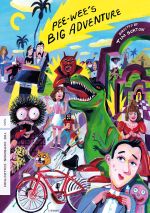
Pee-wee's Big Adventure unquestionably exists as one of my top ten films of all-time, and it arguably brings us the funniest movie ever made. The picture remains just as entertaining now as it was 41 years ago, and I don't think that will ever change. The Blu-ray offers very good picture and audio along with useful supplements. I love this flick and this turns into a good release.