|
WARNER
|
| |
|
MOVIE INFO
|
|
Director:
Stanley Kubrick
Cast:
Matthew Modine, Adam Baldwin, Vincent D'Onofrio, R. Lee Ermey, Keir Dullea, Gary Lockwood, William Sylvester, Daniel Richter, voice of Douglas Rain
Writing Credits:
Gustav Hasford (novel, "The Short Timers"), Stanley Kubrick, Michael Herr, Gustav Hasford
Tagline:
Vietnam can kill me, but it can't make me care.
Synopsis:
A superb ensemble cast falls in for action in Stanley Kubrick's brilliant saga about the Vietnam War and the dehumanizing process that turns people into trained killers. Joker, Animal Mother, Gomer, Eightball, Cowboy and more - all are plunged into a boot-camp hell pitbulled by a leatherlung D.I. (Lee Ermey) who views the would-be devil dogs as grunts, maggots or something less. The action is savage, the story unsparing, the dialogue spiked with scathing humor. Full Metal Jacket, from its rigors of basic training to its nightmare of combat in Hue City, scores a cinematic direct hit.
Box Office:
Budget
$17 million.
Opening Weekend
$2.217 million on 215 screens.
Domestic Gross
$46.357 million.
MPAA:
Rated R
| |
|
DVD DETAILS
|
Presentation:
Widescreen 1.85:1/16X9
Audio:
English Dolby Digital 5.1
Spanish Dolby Digital 5.1
French Dolby Digital 5.1
Subtitles:
English
Spanish
French
Closed-captioned
Supplements Subtitles:
None
Runtime: 117 min.
Price: $79.92
Release Date: 10/23/2007
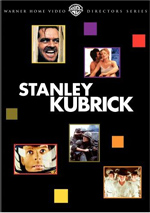
Available Only as Part of “Warner Home Video Directors Series: Stanley Kubrick”
Bonus:
• Audio Commentary with Critic Jay Cocks and Actors Adam Baldwin, R. Lee Ermey and Vincent D’Onofrio
• “Full Metal Jacket: Between Good and Evil” Featurette
• Trailer
| |
|
PURCHASE @ AMAZON.COM
|

| |
|
EQUIPMENT
|
Sony 36" WEGA KV-36FS12 Monitor; Sony DA333ES Processor/Receiver; Panasonic CV-50 DVD Player using component outputs; Michael Green Revolution Cinema 6i Speakers (all five); Sony SA-WM40 Subwoofer.
| |
[an error occurred while processing this directive]
|
Full Metal Jacket: Warner Home Video Director's Series (1987)
|
|
Reviewed by Colin Jacobson (December 2, 2007)
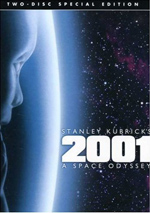
As I reviewed 1987’s Full Metal Jacket, I did so within the context of a full-blown examination of much of Stanley Kubrick’s work. I’ve watched the new DVD releases of his films in chronological order, so Jacket was the last of the five movies I examined. I had never much cared for most of his flicks, but after a surprisingly positive experience with previously-hated 2001: A Space Odyssey, I kept open the thought that perhaps I’d now enjoy Jacket. Would I still dislike it after all these years?
Short answer: yes. Actually, the long answer's also "yes”. I originally watched Jacket during its theatrical run. If I recall correctly, I thought it lacked any real reason to exist. The first half was generally regarded as the best part, and Lee Ermey built his career around the "ultimate drill sergeant" act seen here. Unfortunately, I didn't think much of those scenes, and the rest of the film was even less interesting. Jacket didn't seem to offer anything we hadn't already seen in 8000 other Vietnam movies, and I thought most of its predecessors did it better.
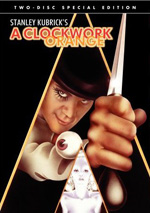
While I've clearly modified my opinion of 2001, all my original criticisms of Jacket remain. In reality, my only substantial original problem with it stemmed from my feeling that it offered nothing new, and that was definitely still the case. I had multiple instances of déjà vu throughout this film. Unfortunately, my recent experiences with Kubrick via pictures like 2001 and A Clockwork Orange showed that something else was missing from Jacket: the superb restraint and subtlety he showed in those movies.
Jacket splits unevenly between the first 40 percent or so of the film - which introduces our main character, Joker (Matthew Modine) in boot camp - and the rest of the piece, which shows Joker's experiences in Vietnam. The first segment generally received the most praise, and I agree that it was more interesting than the remainder of the picture. That didn't make it very good, however.
As far as the "déjà vu" part goes, the first section of Jacket elicits a few memories of An Officer and a Gentleman, but to be frank, the movie it most resembled was Stripes. Essentially the boot camp part of the movie was a more intense and brutal version of that comedy classic. Even the film's opening shot, in which all the new recruits received their severe military buzzcuts, directly quoted the Bill Murray flick.
Since I've never been in the military, I can't say this for sure, but I think that in an odd way, Stripes probably presented the more realistic picture of training camp. Kubrick's offering was so harsh and negative that it almost completely destroyed any view of the real world. I have no doubt that Marine boot camp would be tremendously unenjoyable, but there has to be some semblance of humanity on display there. Not if we're to believe Kubrick, however. Only Joker occasionally showed glimmers of sympathy for pathetic Gomer (Vincent D'Onofrio), the sub-Gump loser who couldn't hack it until he went psycho.
That brings me to the other main flaw of Jacket: the way that Kubrick virtually beat the viewer over the head with his concepts. All the "blank slate" ideas from 2001 and Clockwork flew out the window here. Kubrick clearly wanted us to see that the military creates killers by stomping the humanity out of them.
It's all rather absurd, to be honest. One minute Gomer's a moronic screw-up who wants to succeed but is just too stupid to do so. Once he goes around the bend psychologically, however, Gomer all of a sudden gains about 30 IQ points and becomes one bitchin' Marine!
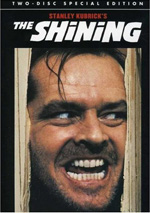
Of course, this comes at a cost: Gomer becomes both suicidal and homicidal, which is always a nice pair. Pretty subtle there, Stanley - I hope I didn't miss your point. As if Kubrick's ham-handed handling wasn't bad enough, D'Onofrio offered an exceedingly bad performance as Gomer. As a pleasant simpleton, his inspiration seemed to come from Disney’s Goofy; I truly expected him to say "Gawrsh!" from time to time. D’Onofrio appeared to use another Kubrick work to provide a model for psycho Gomer: Jack Nicholson from The Shining. I think D'Onofrio watched the "Here's Johnny!" scene over and over and took it from there. I know I was supposed to be scared or spooked, but to be honest, when he leered at Joker and rolled his eyes back in his head, I found it tough not to laugh. D'Onofrio was so over the top that the sequence became unintentionally comic.
After all that, you'd think the Vietnam scenes would be an improvement, but they're not. Once again, the pilfering of inspirations from other films continues. One segment showed the grunts as they were interviewed for TV, and it reminded me an awful lot of those M*A*S*H episodes in which journalists visited the 4077th. Frankly, it was sad to watch such an influential director steal so much for his own film.
Kubrick's lack of subtlety continued during the Vietnam part of Jacket. Once again, he told us what to think and never allowed us to draw our own conclusions. War is hell - thanks Stan, I didn't know that! Joker remained the most sympathetic character, and he was obviously supposed to be the audience's entry into the story. Unfortunately, Modine was pretty flat throughout the picture. They dressed him up as John Lennon - find a still from his appearance in How I Won the War and you'll see what I mean - and made him a pseudo-peacenik to keep the brutality of the other Marines from becoming overwhelming.
Actually, that touch wasn't needed, because the horror of war never really came through in Jacket. Since Kubrick couldn't find an original way to depict the battle, it all seemed like a summer rerun, and it lacked the impact of previous war films. I never felt involved in the story or had any interest in the happenings. The film tried to startle and shock us, but it failed and it essentially limped along until its conclusion.
Is Full Metal Jacket the worst movie ever made? No, not by a long shot. For all its faults, it remains a competently executed war film. However, it may well be Kubrick's worst picture, and that is why many others and I have treated it harshly. For better or for worse, he was regarded as a master director, and “okay” just wasn't good enough for someone of that stature.
|
The DVD Grades: Picture A-/ Audio B+/ Bonus B
|
|
Full Metal Jacket appears in an aspect ratio of approximately 1.85:1 on this single-sided, double-layered DVD; the image has been enhanced for 16X9 televisions. Don’t expect any problems through this fine transfer.
Sharpness seemed to be quite positive during the majority of the film. During a few of the boot camp scenes, I thought some wide shots appeared slightly soft. However, this was a very minor complaint, as almost the entire movie was crisp and well-defined. I saw no signs of moiré effects or jagged edges, and edge enhancement seemed absent. As for source flaws, only a couple of specks cropped up during this clean transfer.
Jacket featured a fairly subdued palette for the most part, and the DVD replicated these hues well. Although the colors tended to appear slightly pale at times, these tones made sense within the design of the film and they looked clear and accurate. The Vietnam sequences provided the strongest colors, especially during sunset shots; on those occasions, the golden tones were very strong.
Black levels appeared nicely deep and dense, and shadow detail was also quite strong. All low-light scenes seemed appropriately dark but never too opaque, and some presented very strong delineation. For example, the sequence during which the other Marines attacked Gomer in bed showed solid and stark lighting that made the piece all the more effective. Ultimately, I was quite impressed with the picture of Full Metal Jacket and thought it offered a consistently solid visual presentation.
The Dolby Digital 5.1 soundtrack of Full Metal Jacket opened up the mix and provided a fine auditory setting. During the boot camp scenes, the soundfield generally remained fairly monaural. The music spread quite nicely to all five channels, but effects seemed appropriately constrained to the center for the most part; I heard nice localization when the grunts were on the shooting range, and some general ambience also stretched across the different speakers, but the mix preferred to stay centered.
That attitude changed when our characters went to Vietnam. Once we got to a battlefield, the soundscape opened up nicely and provided a lot of appropriately-placed sound. Choppers flew past neatly, and their blades seemed to engulf me when we watched folks on board them. The skirmishes showed a wide range of effects, as gunfire and mortar blasts appeared in logical locations that made the fight come from all around me. While this mix certainly won’t replace that of
Saving Private Ryan in the “demo” department, I still thought it presented an involving and atmospheric track that nicely broadened the original monaural mix.
Audio quality demonstrated a few concerns, but these seemed fairly minor. As I already noted, some problems came along with the dialogue. At times, speech seemed constrained and stiff, and a bit of edginess also could be heard. Lee Ermey’s lines were the most significantly flawed of the bunch; they consistently showed signs of brittleness.
Otherwise, the remaining elements sounded quite good. Effects were usually quite clean and realistic, and they showed positive dynamics. A little gunfire seemed slightly distorted, and I felt that explosions displayed minor “boominess”, but for the most part, these aspects of the track were very clean and accurate, and they worked well. Music seemed even better reproduced, as the score was bright and dynamic at all times. I found the music to sound very distinct and rich, and the track provided nice depth as well. I went with a “B+” for the mix, largely due to the occasional edgy speech. Nonetheless, this was a very good remix.
How did the picture and audio of this 2007 edition compare to those of the 2001 version? I thought both presented identical 5.1 soundtracks, but the visuals differed. The 2007 version provided the first-ever presentation of Jacket in its original theatrical aspect ratio; apparently at Kubrick’s request, the prior renditions were fullframe affairs. Some may view the new widescreen picture as a violation of Kubrick’s wishes, but I get the feeling his edict was really meant to reflect a period with smaller TVs and lesser resolution. I believe that if Kubrick now know how common large sets and hi-rez material has become, he’d be A-OK with the letterboxing.
To my eyes, though, the altered aspect ratio stood as the only difference between this transfer and the old one. Though presented fullframe, the 2001 DVD looked very good. It showed exactly the same pattern of strengths and minor weaknesses as this one. I’m happy to get the film in its original aspect ratio, but otherwise the two transfers seemed like clones of each other. (For comparisons to the original 1999 DVD, please consult the 2001 review.)
In terms of extras, Jacket stands as the weakest of the new 2007 Kubrick special editions; it’s the only one that doesn’t get a two-disc release. It includes a few good bits, though. We start with an audio commentary from critic Jay Cocks and actors R. Lee Ermey, Adam Baldwin and Vincent D’Onofrio. All sit separately for this edited track. Note that Baldwin doesn’t show up until dshgajdhsakdhsad. We learn about cast and performances, the actors’ training, Kubrick’s methods and collaborating with him, sets and music, the source material and its adaptation, and a mix of other topics.
Ermey and Baldwin are the odd men out here, as they only pops up a handful of times. Ermey disappears fairly early in the film, while Baldwin doesn’t appear until around the 65-minute mark. D’Onofrio dominates the first part of the film and still appears in the rest even though his character is gone; he just shows up less frequently, so the track becomes Cocks’ baby.
That makes the first section of the film the most useful. D’Onofrio throws out a lot of good insights into the production and Kubrick. He offers a fine look at the director’s style and how he worked on Jacket.
Cocks provides some content of that sort as well, but he’s not nearly as interesting. Partly that’s because Cocks devotes a lot of his time to praise of the film, and he also gets into some bland interpretation of it. We don’t find a lot of depth in his chat, though some decent moments emerge. Oh, and someone needs to tell him that it’s “Ermey”, not “Emery” – Cocks constantly mispronounces the actor’s name. Still, there’s more than enough gold from D’Onofrio to make this a good commentary.
In addition to the film’s trailer, we find a new documentary entitled Full Metal Jacket: Between Good and Evil. This 30-minute and 47-second piece mixes movie clips, archival materials and interviews. We hear from Ermey, Baldwin, D’Onofrio, Cocks, former Warner Bros. executive John Calley, The Complete Kubrick author David Hughes, Stanley Kubrick: A Biography author John Baxter, executive producer Jan Harlan, steadicam operator John Ward, assistant art director Nigel Phelps, Do the Right Thing cinematographer Ernest Dickerson, 2010 director Peter Hyams, and actors Kevyn Major Howard and Dorian Harewood. “Good” looks at the source material and the development of the project. From there we hear about casting and performances, recreating Vietnam in England, the length of the shoot and its effect on the actors, Kubrick’s working methods, some themes and interpretation, and thoughts about the movie’s legacy.
“Good” acts as a solid compliment to the commentary. It covers much of the same territory but still manages not to repeat a lot of the content from the commentary. We get a nice examination of the project in a general way, though anecdotes about Kubrick serve as the show’s highlights. This turns into a satisfying program.
Full Metal Jacket remains a decent flick, albeit one with little point or flair to distinguish it from others in its genre. And that’s a problem, as we expect more than “decent” from Stanley Kubrick. It’s one of his lesser films. The DVD offers very good picture and audio as well as some interesting extras.
In terms of recommendations, I definitely can’t push this mediocre war film on those without a pre-existing fondness for it. Those folks will be happy with the new DVD, though I don’t know if it merits a double-dip for fans who already own the 2001 version. Sure, it’s nice to get the film in its theatrical aspect ratio, but the prior framing wasn’t objectionable – especially since it apparently came with the director’s blessing. Both DVDs offer very similar picture and audio quality, though the 2007 edition provides a smattering of new extras. It’s a decent upgrade but not a stellar one.
Note that this special edition of Full Metal Jacket appears only as part of a six-feature set called “Warner Home Video Directors Series: Stanley Kubrick”. In addition to Jacket, this package includes new special editions of 2001: A Space Odyssey, A Clockwork Orange, The Shining and Eyes Wide Shut. It also provides a documentary entitled Stanley Kubrick: A Life in Pictures. This package retails for about $80, which makes it a good deal if you want all the movies.
|
|
[an error occurred while processing this directive]
|
|