Reviewed by Colin Jacobson (March 15, 2026)
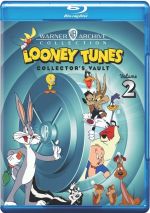
After four volumes in a series called Looney Tunes Collector’s Choice, the Warner Archive Collection started a new set here in June 2025 via Looney Tunes Collector’s Vault Volume 1. Nine months later, we find ourselves with the logically titled Looney Tunes Collector’s Vault Volume 2.
Like V1, Volume 2 provides a collection of 50 cartoons “intended for the adult collector and may not be suitable for children”. As a disclaimer at the start of each disc tells us, we get shorts that are a “product of their time. They portray ethnic, racial, gender and other stereotypes that existed in our society at the time these shorts were made”.
How much the reels potentially offend varies. Some seem obviously problematic while others lack blatant issues.
On these two discs, each platter brings the shorts in alphabetical order for that disc, so the alphabet resets for Disc Two. I’ll provide plot synopses from IMDB as well as quick thoughts and my own subjective ratings on a 1-10 scale.
DISC ONE:
A-Lad-In His Lamp (1948): “Bugs Bunny finds and rubs Aladdin's lamp and decides to follow the genie to Baghdad, where they battle Mad Man Hassan.”
V2 leaps out of the gate with a pretty obvious contender for the “now objectionable content” title, as Lamp offers a stereotypical take on the residents of the Middle East. Still, it doesn’t really make “Mad Man Hassan” terrible in terms of racism as much as it just fashions him as another one of Bugs’ obnoxious foes.
Lamp actually deviates from the usual “Bugs vs. an arrogant blowhard” motif in that he relies on the genie to do most of his work. This creates a decent slant on the typical Bugs cartoon. 7/10.
Ain’t That Ducky (1942): “Daffy deals with a duckling who tries to evade a hunter.”
Like Lamp, Ain’t brings a short in which our lead character seems more superfluous than usual. Not that Daffy lacks major involvement, but we see more of the supporting roles than we might expect.
We also find a hunter who comes across as an attempt to create an alternate Elmer Fudd. This new character seems forgettable, but the duckling’s mix of anger and weepiness amuses, and Daffy gets enough wacky moments to make this one a quality product. 8/10.
The Bird Came COD (1942): “On a job to deliver a plant to a movie studio, a cat plays with a magic hat and contends with a feisty avian occupant.”
Despite the pun, none of that relates to 1941’s The Bride Came COD. Bird seems moderately amusing but the story makes so little sense that it doesn’t really fly. 5/10.
Bone Sweet Bone (1948): “An archaeologist at a museum scolds his dog Shep for supposedly removing a bone belonging to a dinosaur skeleton and orders Shep to bring the bone back.”
This feels like an attempt to create a new regular character, but I don’t think Shep caught on. As far as I can tell, Bone marks his first and only appearance.
Given that Shep exists as one of many Looney Tunes roles who battled with a larger and tougher foe, he does seem forgettable in that regard. Still, Bone finds enough cleverness to make it work. 7/10.
Boston Quackie (1957): “Daffy Duck is an American agent in Paris assigned to guard the valuable secret contents of a briefcase. A man in a green hat steals the briefcase and leads Daffy on a chase aboard the Cloak and Dagger Express.”
As the Looney Tunes franchise progressed, we found more and more shorts that embraced genre parody. Some of these satisfy but some feel like they stretch the characters too far.
Quackie leans in that direction, as the mix of Looney Tunes slapstick and secret agent intrigue don’t really blend. It becomes a moderately entertaining short but not a great one. 6/10.
Boulevardier from the Bronx (1936): “Led by rooster pitcher Dizzy Dan, the Chicago Giants play the Hicksville team.”
In general, I find early to mid-1930s Looney Tunes to seem more cutesy than funny, but Bronx shows glimmers of the spark that infuses the best shorts. While not a classic, it fares better than I expected. 7/10.
Country Boy (1935): “Peter Rabbit constantly causes trouble at the local farm with his youthful antics.”
Here comes the cutesy side of Looney Tunes I just mentioned, and it comes in spades. Though not devoid of amusement, Boy relies more on adorable bunnies to sell the audience than anything else. 4/10.
The Daffy Duckaroo (1942): “Singing cowboy Daffy retires to the Painted Desert where he falls for an Indian maiden with a Brooklyn accent.”
It seems ironic that a short one assumes will involve lots of color comes as a rare black and white Looney Tunes affair. Well, it was wartime and budgets got cut at times, I guess.
Obviously the portrayal of Native Americans creates the short’s less-than-PC elements. Even with those, it brings plenty of creativity. 8/10.
Dr. Jerkyl’s Hide (1954): “Two cockney canines chase Sylvester Cat into the lab of Dr. Jerkyl, where the cat drinks Hyde formula and changes into a wildcat.”
Looney Tunes loved the Jekyll/Hyde themes and used them more than once. Hyde does nothing remarkable with the concept but it still creates amusement. 7/10.
The EGGcited Rooster (1952): “Foghorn Leghorn goes on egg-sitting duty while his wife plays cards. Henery Hawk comes by as Foggy looks for someone to relieve him.”
Will I ever tire of Henery? Probably not, and the short uses him in a creative manner. 8/10.
Fastest With the Mostest (1960): “Wile E. Coyote attempts to slaughter the Road Runner.”
Obviously I understand that many folks love Road Runner shorts. I remain detached from that fan base, though, and the redundant antics of Mostest don’t change my mind. 3/10.
Fowl Weather (1953): “Granny assigns a bulldog named Hector to take care of Tweety while she's away but Sylvester Cat has other ideas.”
Despite Hector’s part, Tweety does most of the damage to Sylvester here. The short finds creative ways to shake up the formula. 8/10.
I Taw a Putty Tat (1948): “Sylvester regularly eats pet birds but he meets his match with a small canary named Tweety.”
Given Tweety and Sylvester had already appeared together prior to 1948, it seems odd Tat would create the impression this acts as their introduction to each other. Nonetheless, it creates a good variation on the themes, especially because it indicates that Sylvester can succeed in his attempts to devour birds, a storytelling choice that adds punch. 8/10.
I Gopher You (1954): “Two polite twin gophers are indignant at the swiping of all their vegetables by ‘vandals’ in trucks. They follow the trucks to a food processing plant and become caught in the machinery when they try to retrieve their property.”
The “Goofy Gophers” give off a bit of a Disney Chip ‘n’ Dale vibe, though of course the short comes with more violence than Walt would’ve allowed. You never becomes great but it boasts some laughs. 7/10.
I Was a Teenage Thumb (1963): “A kindly traveling magician named Ralph K. Merlin uses his powers to give a couple a thumb-sized baby who grows into a tiny knight to serve King Arthur.”
As implied earlier, Looney Tunes got weirder over time and stretched from the standard “antagonists who face off” themes of the 1940s. Thumb becomes an odd mix of weird characters and Arthurian legend that I respect for ambition but don’t especially enjoy. 5/10.
Little Blabbermouse (1940): “A mouse leads tours of a drugstore for other mice.”
Though Looney Tunes “went cutesy” more often during the 1930s, that doesn’t mean the trend ended in the 1940s, as Blabbermouse offers an example of that theme. Still, the title character proves amusingly annoying and the puns of the drugstore items create amusement. 6/10.
Mother Was a Rooster (1962): “The barnyard dog steals an ostrich egg and places it by Foghorn Leghorn. When Foggy wakes up, he thinks he has laid a huge egg.”
If nothing else, “Mother” provides a goofy quirk on the standard Foghorn Leghorn themes. It proves pretty effective. 8/10.
Pests for Guests (1955): “Elmer Fudd buys a wooden set of drawers not knowing that two polite twin gophers have claimed the piece of furniture as their home.”
The Goofy Gophers return in the only short they shared with Elmer. This becomes a moderately successful crossover, if not a classic. 6/10.
The Rattled Rooster (1948): “A rooster is unable to get worms, as the other chickens either get there first or trick him out of the worms. But there's one worm nobody else competes for because it's a trickster.”
Did either this rooster or the worm ever appear again? I don’t recognize them, but they create a pretty lively pair. 7/10.
A Sheep in the Deep (1962): “Ralph Wolf and Sam Sheepdog punch into work, with Sam guarding a flock of sheep against Ralph's attempts to snatch some mutton for dinner. Ralph uses a lull-a-bye record to put Sam to sleep and steals one of the sheep.”
Ralph and Sam never came across as anything other than a variation on the Road Runner shorts, right down to the fact Ralph looks an awful lot like Wile E. Coyote. I do prefer the Ralph/Sam shorts to the Road Runner adventures, but that comes as faint praise given my nearly complete lack of interest in the latter. 4/10.
Sock a Doodle Do (1952): “A prize-fighting bantam rooster becomes so slap-happy that he goes into a punching spree whenever he hears a bell. He falls out of a truck and onto the farm where Foghorn Leghorn is in the midst of his usual sparring match with the barnyard dog.”
The presence of the punchy rooster adds some spark to the usual Foghorn routine. That results in a better than average short. 7/10.
A Street Cat Named Sylvester (1953): “Tweety seeks shelter from a blizzard and taps on Granny's door. Sylvester answers and grabs the canary.”
Given that Tweety’s the homeless one, this cartoon’s title makes no sense beyond the basic pun related to A Streetcar Named Desire. Despite that odd choice, we get a pretty good reel from this one. 7/10.
To Itch His Own (1958): “Mighty Angelo the Flea takes a vacation on a dog in the country. The muscular insect becomes the little mutt's protector when he is bullied by Butcher the bulldog.”
Every time I see a character like Angelo – who wouldn’t reappear until The New Looney Tunes in the 2010s – I assume that the producers hoped he’d catch on and generate more shorts. Does it come as a surprise that a muscular blood-sucking insect didn’t turn into the next big thing?
No, but that doesn’t make Itch a bad short. It doesn’t break new ground but it generates some mirth. 6/10.
A Waggily Tale (1958): “A boy named Junior treats his dog Elvis cruelly and is scolded by his mother and sent to his room to have a nap. Junior dreams that he is a dog adopted by a loving little girl who doesn’t know how to handle a dog.”
I wanted to come down hard on Junior given how much I hate animal abuse. However, since the kid looks like he started to go bald at 10, I’ll give him a pass.
I appreciate that Tale manages a morality story that might inspire kids to be good to their pets, though. It gives us something different and generally succeeds. 7/10.
Woolen Under Where (1963): “Ralph Wolf and Sam Sheepdog are friends, housemates and coworkers who become bitter enemies while they're on the clock. A suit of armor, a skin diving outfit, a unicycle and a makeshift tank figure in Ralph's schemes to catch sheep.”
Does Where do anything to alter the Road Runner vibe of the Ralph and Sam shorts? No, so while I prefer them to their desert-bound siblings, Ralph and Sam remain less than delightful. 4/10.
Zoom at the Top (1962): “Wile E. Coyote tries and fails to catch the Road Runner using a bear trap with a bird seed bait, a jet rocket, an ice-making machine, and a boomerang.”
Bring back Ralph and Sam! 3/10.
DISC TWO:
Awful Orphan (1948): “Porky Pig's quiet life in his high-rise apartment building is rudely disrupted when an obnoxious mutt sneaks in and refuses to leave.”
That doesn’t sound like the most creative concept, as it just places Porky as the put-upon character who needs to deal with a nuisance. Nonetheless, it finds plenty of inventive elements and becomes a delight. 9/10.
A Bird in a Guilty Cage (1952): “Sylvester Cat spots Tweety Bird in a display window of an after-hours department store and sneaks inside through a mail server chute so he can catch him.”
If nothing else, the store setting adds some new grist for the violent mill in the battle between kitty and birdie. That helps give the short added zing. 8/10.
Bowery Bugs (1949): “Bugs Bunny recounts the story of how he tricked a man named Steve Brody into leaping off the Brooklyn Bridge.”
It makes little sense that circa 1949 Bugs claims he was alive and active in 1886, but it’s not like Looney Tunes shorts exist as a bastion of logic. The end result seems clever and witty enough to overcome this stretch of reality. 9/10.
Claws for Alarm (1954): “Porky Pig doesn't realize that the old hotel where he and Sylvester are spending the night is really part of a ghost town. It's only Sylvester who sees the band of murderous mice trying to do them in, while Porky believes that his cat is just insane.”
I don’t recall if other shorts posited Sylvester as Porky’s pet, but I guess it makes some sense. Claws enjoys a twist because it places Sylvester on the defense and not the aggressor for once, a choice that gives it added zing. 8/10.
Crowing Pains (1947): “Foghorn convinces Henery that Sylvester is a chicken. Foghorn sticks Henery in an egg and sticks it under Sylvester.”
Not the most focused of shorts, Pains can become a bit muddled. Although it seems a bit all over the place, I always enjoy Henery so it comes with some fun. 7/10.
Frigid Hare (1949): “Bugs rescues a penguin from an Inuit hunter at the South Pole and becomes obligated to it beyond his wildest dreams.”
“Character gets stuck with new burden” becomes a common theme in Looney Tunes, and Hare reinvents no wheels. Nonetheless, Bugs adds spark an this generally good short. 7/10.
Hare Remover (1946): “Elmer Fudd is a mad scientist who wants to turn Bugs Bunny into a fiend. Bugs tricks this ersatz Dr. Jekyll into drinking his own mixture; later, each thinks the other has changed into a bear.”
Another day, another Looney Tunes take on Jekyll and Hyde. As hard as the franchise tried to run that theme into the ground, it usually remained effective, and Remover becomes one of the better examples of these efforts. 9/10.
The Heckling Hare (1941): “Bugs finds himself chased by hunting dog Willoughby.”
Obviously Hare depends on tried and true Looney Tunes concepts. While predictable, it comes with good laughs. 8/10.
Hop and Go (1943): “Arrogant kangaroo Claude Hopper takes on a couple of Scottish rabbits.”
Claude offered another one-and-done character, probably because he seemed like an obvious rip off of Disney’s Goofy. Indeed, Pinto Colvig did the voice for Goofy and he recreates the same sound for Claude, right down to Goofy’s signature “gawrsh”.
I don’t know if the Scottish bunnies ever appeared again, and I can’t say that it’s a loss if they didn’t, though they do offer something unusual. In any case, Hop seems derivative but fairly amusing. 7/10.
Hyde and Hare (1955): “Bugs Bunny gets himself adopted as a pet by a kindly soul who has been feeding him carrots every day. Bugs' friend turns out to be Dr. Jekyll who drinks his evil potion and turns into a monster.”
As noted, Looney Tunes loved Jekyll/Hyde, so Hare follows well-worn paths. In any case, our Bunny attempts to deal with his benefactor’s strange transformations in this amusing cartoon. 8/10.
Jumpin’ Jupiter (1955): “Porky and Sylvester's desert campground is sliced away and towed into outer space by a green, bird-like Jupiterian searching for earthly animal life. Porky remains blissfully unaware, leaving Sylvester to be terrorized by the alien.”
So much for my uncertainty if shorts other than Claws for Alarm used Sylvester as Porky’s pet since this one followed Claws by a year. It still seems like an odd choice, especially because it renders the chatty Sylvester mute.
“Little green men” and flying saucers were all the rage in the mid-1950s and Jupiter tries to capitalize on that trend. It creates some laughs but doesn’t stand out as a classic. 6/10.
The Last Hungry Cat (1961): “Sylvester thinks he has swallowed and killed Tweety and suffers terrible remorse.”
That seems like an odd outcome given how much effort Sylvester puts into capturing and eating Tweety. Still, it adds a twist to the Sylvester/Tweety dynamic. 8/10.
Mexican Boarders (1962): “Speedy Gonzales' lethargic cousin Slowpoke Rodriguez comes to visit Speedy's hacienda. This occurs to the delight of Sylvester, who is confident he will be able to catch Slowpoke for dinner.”
It seems unclear how Sylvester ended up in Mexico, but as noted, logic never was a strength of Looney Tunes. Despite the outdated Mexican stereotypes, Boarders manages amusement, particularly via the ways Slowpoke contrasts with his cousin. 7/10.
Mouse Menace (1946): “Porky has a particularly menacing mouse in his house and after his traps and an increasingly nasty set of cats all fail, Porky builds a robot cat. This creation proves to be a much bigger challenge for the mouse.”
The mechanical feline brings a good twist to the usual “cat chases mouse” concept. Menace manages a lot of cleverness. 8/10.
Odor of the Day (1948): “A homeless dog is looking for a place to sleep cause it's snowing outside but he can't find anyone who will let him in their house. He sneaks into Pepe LePew's house but when Pepe gets into bed he smells so bad the dog chases him outside.”
While many of the shorts in this set get branded as potentially objectionable due to gender/ethnic stereotypes, Pepe seems problematic just as a horn dog – or horn skunk, if you will. Unless the French hate his Charles Boyer vibe, I see nothing controversial about the portrayal of his nationality, so we’re left with his aggressive pursuit of the ladies as Pepe’s main concern.
Odor actually avoids Pepe’s womanizing ways and it also makes him mute, so we don’t get the usual Charles Boyer impression. Honestly, this short’s Pepe feels like any of a number of other characters, though it still comes with amusement. 7/10.
Often an Orphan (1949): “Charlie Dog tries everything to get Porky to take him in and he finally does. After a couple pranks the dog pound ends up picking up Porky and not the dog.”
Charlie offers a pretty sassy pooch, even if he never became a classic Looney Tunes character. His attitude creates mirth, even if a scene in which he proposes that Porky eat ham seems unintentionally creepy. 8/10.
The Pest That Came to Dinner (1948): “Porky Pig soon discovers that a termite is responsible for his belongings crumbling to dust. When he can't exterminate the termite himself, he goes to a shyster who offers him a series of unsuccessful methods to remove the termite.”
Pierre the termite feels like a precursor to Angelo the flea from a decade later. Pierre exists as nothing more than another proverbial fly in another character’s ointment, and not an especially memorable one. 5/10.
Ready… Set… Zoom! (1955): “Among the strategies that fail in Wile E. Coyote's attempts to catch the Roadrunner: glue on the road, a giant rubber band, an outboard motor in a wash tub, and dressing in drag as a female Roadrunner.”
Bring back Ralph and Sam! 3/10.
Scent-imental Over You (1947): “Jealous of all the high-class dogs in their fine coats, a little Mexican hairless pooch borrows one, not realizing it's a skunk's pelt. Once she has it on, she finds everyone fleeing from her, except for the amorous Pepe Le Pew.”
A year before the mute and non-sexual Pepe of Odor, You provides our standard eternally horny Pepe we know best. I never much cared for the ooh-la-la Pepe and You fails to change my mind, though it seems decent. 5/10.
Stop! Look! And Hasten! (1954): “The Coyote employs a series of devices to try to capture the Road Runner.”
Bring back Ralph and Sam! 3/10.
To Beep or Not to Beep (1963): “Wile E. Coyote attacks the Road Runner with an enormous boulder-throwing catapult, only to have it constantly backfire on him.”
Bring back Ralph and Sam! 3/10.
Wagon Heels (1945): “Porky leads a wagon train into ‘Injun Joe Territory’ and finally comes up against the fearsome native.”
Of all the stereotypes seen across V2, those related to Native Americans pop up most often, and that doesn’t seem like a surprise given the popularity of Westerns in the same era as these cartoons. Heels pours on the concepts in a heavy manner.
Despite those issues, Heels manages some of the usual creativity. Injun Joe just becomes another obstacle for a Looney Tunes regular to overcome and it brings enough spark to largely succeed. 6/10.
<:P>
Whoa, Be-Gone! (1958): “Wile E. Coyote's plans for catching the Road Runner involve a giant elastic spring, a gun and trampoline, TNT sticks in a barrel, and tornado seeds.”
Bring back Ralph and Sam! 3/10.
Wise Quackers (1949): “After Daffy lands on Elmer's farm, he begs Elmer to take him as a slave to avoid being shot. Daffy tortures Elmer with his antics.”
Much of the movie offers the crazed humor that we expect from Daffy, and it amuses. Though it does nothing new, it milks its concepts well. 8/10.
You Were Never Duckier (1948): “At the National Poultry Show, the prize for Best Duck is only $5, while the prize for Best Rooster is $5,000, so Daffy Duck decides to don a rubber glove top-knot, plucks a real rooster for tail feathers and enters the show.”
V2 closes with a short co-credited to Daffy and Henery Hawk. This appears to exist as the only reel with both.
It surprises me that Looney Tunes didn’t pair the two again given that they make sense together. This ends up in a satisfying reel. 8/10.