Reviewed by Colin Jacobson (October 5, 2026)
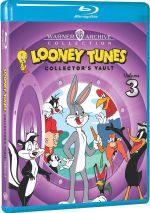
After four volumes in a series called Looney Tunes Collector’s Choice, the Warner Archive Collection started a new set here in June 2025 via Looney Tunes Collector’s Vault Volume 1. Nine months later, we found ourselves with the logically titled Looney Tunes Collector’s Vault Volume 2 and this third volume popped up six months after that.
Like V1 and V2, Volume 3 provides a collection of 50 cartoons “intended for the adult collector and may not be suitable for children”. As a disclaimer at the start of each disc tells us, we get shorts that are a “product of their time. They portray ethnic, racial, gender and other stereotypes that existed in our society at the time these shorts were made”.
How much the reels potentially offend varies. Some seem obviously problematic while others lack blatant issues.
On these two discs, each platter brings the shorts in alphabetical order for that disc, so the alphabet resets for Disc Two. I’ll provide plot synopses from IMDB as well as quick thoughts and my own subjective ratings on a 1-10 scale.
DISC ONE:
Billboard Frolics (1935): “Billboards come to life.”
Early Warner cartoons tended to lean more toward cutesy than funny, and that becomes the case with Frolics. We get lots of puns as well, such as a singing appearance from “Eddie Camphor”.
Frolics does offer some clever bits, even if it lacks an actual plot and much beyond silly antics. Listen for what I believe is the first use of “Merrily We Roll Along”, though, as it soon became the “Merrie Melodies” theme. 5/10.
Country Mouse (1935): “A strong mouse wants to compete as a boxer. However, his equally powerful grandma resists this desire.
Given its title, I assumed Country would fall firmly into the “ultra cute” category, but instead, it becomes a bit edgier than that. No, it pushes no envelopes but since I suspected it’d revolve around an adorable baby mouse, I’ll take it. 6/10.
Dog Gone Modern (1939): “Two curious puppies visit a model home with a panoply of modern inventions, including an annoying robot that sweeps up anything that touches the floor.”
Given that summary, one might assume Modern opts for a lot of cuteness, and some emerges. However, it mostly uses its characters and situations for some clever gags. 7/10.
Don’t Axe Me (1958): “Elmer’s dog tries to convince Fudd to slaughter Daffy Duck for dinner.”
Does Axe offer the only appearance of Elmer’s similarly speech-impaired wife? I don’t know, but she adds an unusual twist.
Otherwise we get a pretty standard reel in which Daffy attempts to outwit Elmer to survive. Despite that framework, the short prompts creative laughs. 8/10.
Don’t Look Now (1936): “Cupid and a Devil compete on St. Valentine's Day to arrange and destroy love affairs.”
A mid-1930s short with a baby Cupid and an adorable Devil? That becomes a recipe for High Cuteness, and one that doesn’t much satisfy. 3/10.
Feather Bluster (1958): “Geriatrics Foghorn Leghorn and the barnyard dog recount their years of violent, mutual heckling while their grandkids take up their antics.”
The sight of elderly characters shows promise but most of Bluster just uses clips from older shorts. That seems lame, and it also feels odd that old Foggy no longer has a Southern accent. 2/10.
A Feather in His Hare (1948): “A Native American hunts Bugs.”
Here’s a short that exemplifies the disclaimer of outdated racial attitudes mentioned earlier. I like Bugs enough to find some amusement here but the cartoon’s stereotypes become tough to overcome. 5/10.
The Gay Anties (1942): “At an 1890s picnic in the park, a man pitches woo to his girl while a steady stream of ants methodically devours and carts off their food.”
That concept seems serviceable at best, and the final result doesn’t do much with it. Minor mirth results and nothing more. 5/10.
Horse Hare (1960): “In the 1880s, Sergeant Bugs Bunny of the United States Cavalry acts as the sole guard of Fort Lariat. Renegade Sam leads a siege.”
We encounter more racially problematic elements here, though not quite as severe as what we found in Feather in His Hare. That said, given theoretical social progress over the 12 years between those two shorts, the stereotypes of Horse feel just as questionable, and perhaps more so.
All of this adds up to a not-so-hot short. Even my affection for Bugs doesn’t save this tedious effort. 4/10.
Joe Glow, The Firefly (1952): “A firefly explores a camper's tent and the various people-sized items that seem gigantic from his POV.”
This one definitely goes down a cutesy path and that makes it a bit cloying. However, it still comes with a few laughs. 5/10.
Lady, Play Your Mandolin! (1931): “Things are hopping at a certain Mexican café. When Foxy walks in, the customers go really wild.”
Like others Warner shorts from this early era, Play offers some archival value but not a lot of amusement. It does provide a remarkably blatant rip-off of Mickey Mouse, though. 3/10.
The Lyin’ Mouse (1937): “A mouse tries to free himself from a trap. He attempts to use a fable to convince a cat to help.”
With a completely adorable mouse, we find more of the dreaded cuteness on display here. The focus on the rodent’s storytelling doesn’t overcome this drawback so we find a pretty meh short. 4/10.
Mice Follies (1960): “Rodents Ralph Crumden and Ned Morton have stayed out too late and return home fearing their wives' wrath. Along the way, they encounter and anger a cat, who follows them home and attacks them in the dark.”
Just based on its title, I figured Follies would become a 1930s musical packed with little more than precious rodents and their winsome antics. Obviously I got the year totally wrong, and this means a cartoon with a wholly different attitude than what I anticipated.
Instead, Follies parodies The Honeymooners and does so with mediocre results. It feels more like a less-than-imaginative ripoff and less like an inspired spoof. 3/10.
My Green Fedora (1935): “Peter Rabbit tries to stop his little brother Elmer from crying but nothing seems to work. When he gets tired of listening to it and leaves the baby alone, a weasel kidnaps Elmer so Peter goes to rescue him.”
Unsurprisingly, Fedora offers one of those “cute but not funny” shorts I too often mention here. Like others, a few clever bits emerge, but the overall result seems forgettable. 4/10.
Nothing But the Tooth (1948): “Porky Pig travels by horse-pulled, covered wagon to California to join in the 1848 Gold Rush. He finds himself ambushed by a diminutive, large-nosed, nasal-voiced, ever-so-polite Mohican with glasses who wants to scalp the west-bound pig.”
At least so far, all this set’s racial stereotypes revolve around Native Americans. Perhaps that will change eventually but that becomes the trend through this part of the package.
That said, the lead on display exists more as a wimpy weakling than an “Injun”, so those issues feel less prominent than usual. Porky never becomes a great protagonist but some laughs result. 6/10.
Of Thee I Sting (1946): “A mosquito army prepares for the attack.”
“Sting” uses its military conceit to good effect. We get a fun look at the rigorous training endured by the blood-sucking pests in this inventive reel. 8/10.
A Pizza Tweety-Pie (1958): “When Granny takes Tweety to Venice on vacation, An Italian cat pursues the tiny bird.”
It seems unclear if the feline involved is supposed to be the same one who goes after Tweety back home in the USA or if he offers an Italian cousin of Sylvester. Whatever the case, the change of scenery brings some amusing twists to the usual motif. 7/10.
Shake Your Powder Puff (1934): “Animals put on a musical show.”
While I’m too lazy to check, V3 feels heavier on 1930s Warner shorts than usual. If accurate, I suspect that’s because prior sets used up a lot of the 1940s cartoons from Warner’s strongest era.
That leaves us with a lot of cartoons that offer interest for their historical value but not much humor. Puff actually deviates from this pattern, happily, as it offers more laughs than typical for its era. 6/10.
Sinkin’ in the Bathtub (1930): “The music-happy Bosko and Honey take a car ride, but bad luck briefly interrupts their fun.”
A blatant ripoff of Mickey Mouse, Bosko also brought some racial stereotypes and remains known only to animation fanatics. Bosko shorts never became anything enjoyable and that remains the case with this dud. 2/10.
Sleepy Time Possum (1951): “Ma and Pa O'Possum feel frustrated that their son Junior doesn’t do his chores. Pa dresses like a dog to suddenly awaken Junior and scare him in the hope that this will teach the young critter a lesson.”
I don’t know if these characters ever appeared again, but they feel like an attempt to launch a new franchise. Nothing about Sleepy flops but it doesn’t become particularly inventive or amusing either. 5/10.
Slightly Daffy (1944): “General Daffy commands a western fort. When Natives attack, he needs to rouse Porky to defend the location.”
Oh my – another short with plenty of “Injun” stereotypes! This package sure seems heavy on these.
At least I like the role reversal that pits Daffy as the boss and Porky as the underling. Even with the unfortunate racial elements, the Daffy/Porky dynamic creates laughs. 7/10.
A Star Is Hatched (1938): “Emily the chicken lives in Hickville but dreams of Hollywood. Her chance comes when director J. Megga-Phone happens to drive past and gives her his card.”
Within this scenario, some clever bits emerge. These don’t dominate, though, so we end up with a likable but mediocre short. 5/10.
Tree Cornered Tweety (1956): “In the big city, Sylvester tries to catch Tweety.”
Tree uses a police procedural framework complete with Tweety narration. That gives the short spark, even if it comes with the usual antics. 6/10.
Trick or Tweet (1959): “Sylvester Cat and a goony orange cat pretend not to let their rivalry over trying to catch Tweety Bird interfere with their friendship. However, each secretly makes an attempt to grab and eat the canary while the other isn't looking.”
That competition adds a little oomph to the usual shenanigans. Add the weird characterization of the orange cat and we get a fairly solid short here. 7/10.
Tweet and Sour (1956): “Granny warns Sylvester that if anything ever happens to Tweety, she will have Sylvester turned into violin strings. A one-eyed orange tabby makes off with Tweety and Sylvester must rescue the canary.”
Thanks to this set’s presentation of the shorts in alphabetical order, the “T” area becomes Tweety Central. Of course, two of the three Tweety cartoons here don’t start with “tweet” but given the Looney Tunes preference for alliterative titles, connections to Tweety became logical once we hit “T”.
Anyway, the notion of a predator forced to become protector exists as a moderate staple of cartoons. Nonetheless, Sour manages to become a good exploration of that concept. 7/10.
DISC TWO:
Ballot Box Bunny (1951): “When Yosemite Sam campaigns on a platform including rabbit genocide, Bugs runs against him.”
The election motif brings zing to the short. It works spectacularly well. 10/10.
Boobs in the Woods (1950): “Daffy Duck disguises himself to heckle Porky Pig, who has come to what he thought was a secluded woodland to paint pictures of the scenery.”
I do love me some truly daffy Duck and “Woods” shows our favorite mallard in a loony light. Daffy butts heads with Porky to the delight of the viewer. 10/10.
Booby Hatched (1944): “A duck tries to keep her offspring warm during a frigid winter. One gets lost along the way.”
A duck cartoon without Daffy? Blasphemy!
Nonetheless, “Booby” features the half-hatched duckling to amusing effect. We get some good laughs along the way. 8/10.
Case of the Missing Hare (1942): “Bugs' home in a hollow tree is marred when the magician Ala Bahma plasters his show posters all over it. Bugs goes to the show to heckle.”
Although Case follows a pretty standard Bugs template, the antics of the magician add a twist. These allow the short to become a winner. 9/10.
Conrad the Sailor (1942): “Conrad Cat's attempts to keep the battleship decks swabbed are frustrated by Daffy's tricks.”
As noted in the next paragraph, Looney Tunes created some shorts very focused on World War II. Sailor features the military and came out during the conflict but it doesn’t directly reflect WWII.
Instead, we get typical Daffy shenanigans as he torments the sailor. Daffy’s behaviors don’t seem especially motivated and given his apparent stupidity, Conrad fails to turn into an effective antagonist, but we find reasonable amusement anyway. 7/10.
Daffy - The Commando (1943): “Commando Daffy Duck goes behind enemy lines and causes havoc for a Nazi German officer and his troops.”
World War II-specific Warner shorts remain an underexplored subgenre. We’ll get more on this set but Commando becomes the first we find that falls into this domain.
The story feels like a better fit for Bugs, but Commando nonetheless manages to become more than just the basic wartime propaganda I feared I’d find. Daffy gets the best of the Nazis in an entertaining manner. 8/10.
Footnote: this short’s two Nazis could be seen as inspiration for Colonel Klink and Sergeant Schulz. The leader of the pair comes with similar look and monocle while his underling sports is actually named “Schulz” and wears the same kind of helmet as the sitcom character.
That said, 1942’s To Be or Not To Be acted as the influence for these roles in the cartoon. As such, Heroes probably borrowed from that movie and not Commando, but who knows?
Duck Soup to Nuts (1944): “Porky hunts ducks. This leads to confrontations with Daffy.”
It’ll always seem odd to see a pig try to murder a duck. I mean, Elmer makes sense as a hunter since he’s a human, but why do anthropomorphic animals hunt each other?
In any case, Daffy vs. Porky usually clicks, and that becomes the case here. While the short doesn’t reinvent any wheels, it works. 7/10.
Fox-Terror (1957): “Foghorn's going fishing, but a fox has other plans for him.”
The short’s fox feels more like a variant on Bugs than a fresh character. Still, this becomes a better than average Foggy short. 7/10.
Foxy By Proxy (1952): “Bugs confuses the hunting dogs by dressing up in a Halloween fox costume.”
I appreciate the anti-hunting message semi-implicit here, but the short itself doesn’t have a ton going for it. Bugs’ foe is so stupid that his antics seem meaner than justified. It would’ve been better if Bugs fought a wily foe, not a dopey one. 5/10.
Fresh Airedale (1945): “Dogs are man's best friend but an exception to this adage is a selfish, sneaky canine called Shep. Stealing his master's meat, letting burglars into the house for a bone, and drowning prize-winning pups are some of his nasty doings.”
It seems like a role reversal to make a pet dog a jerk and a cat the nice one, but it works. This doesn’t turn into a classic but it comes with laughs. 7/10.
Goldimouse and the Three Cats (1960): “Sylvester and his son Junior try to catch Goldimouse. She came from the forest into their house to sample their porridge.”
Parodies of Goldilocks pop up a lot but the cats’ desire to eat Goldimouse adds a good twist. We find a fine reel here. 8/10.
Hare Meets Herr (1945): “Bugs disguises himself as Hitler, Stalin and Brunhilde when he confronts Nazi Hermann Göring in the Black Forest.”
If you expect this version of Hermann Göring to exist as anything other than another typical stooge who loses battles of wits with Bugs, sorry. The Nazi Germany setting brings some fun curveballs, at least. 7/10.
Holiday for Shoestrings (1946): “To the tune of The Nutcracker, a number of elves do all the work in a shoe shop.”
I tend to view the sentimental shorts as the purview of the 1930s Warner but this one proves me incorrect. it proves more cute than funny, but it comes with some clever moments. 6/10.
Hollywood Daffy (1946): “Daffy sneaks onto the Warmer Bros. lot and poses as a tour guide.”
Looney Tunes loved their movie star parodies, and this one brings some fun “cameos”. Most of it concentrates on the sparring between Daffy and a dopey studio guard, with reasonable amusement as a result. 7/10.
I Got Plenty of Mutton (1944): “A starving wolf dresses up like a sexy ewe to try and lure the ram from his post so he can get to the sheep for a meal.”
Unsaid there: the way the short incorporates some WWII elements into its plot, albeit in a secondary manner. Nothing especially memorable results in this average cartoon. 5/10.
Mississippi Hare (1949): “Cotton pickers mistake Bugs' tail for a ball of cotton and toss him in with the rest of the haul. On the riverboat Bugs takes on the gambler Colonel Shuffle.”
After so many shorts with blatant Native American stereotypes, Looney Tunes broadens into those with some Black characters. That said, we simply see those roles as cotton pickers at the start so they don’t become as blatantly racist as the Natives seen earlier.
In any case, “Colonel Shuffle” feels like a riff on Yosemite Sam, even though he looks suspiciously like the Mad Hatter from Disney’s Alice in Wonderland. Granted, the film came out a year after this short, but I can’t help but suspect the Warner crew saw Hatter in development and “borrowed” the design.
Hare would probably work better with Sam, as Shuffle lacks real bite. Still, the Bugs shenanigans carry us. 7/10.
Mutiny on the Bunny (1950): “Shanghai Sam needs a new crew for his ship. Bugs signs on but rebels at the captain's cruelty.”
The scenario provides a smattering of laughs. However, the comedy feels a bit perfunctory. 6/10.
My Favorite Duck (1942): “Porky tries to relax on a hunting and fishing trip. Daffy smugly points out the ‘No Duck Hunting’ signs and subjects him to constant irritation.”
While we get a lot of Daffy vs. Porky shorts, the manner in which the duck taunts the pig adds spark. These elements ensure good laughs, especially with a clever finale. 8/10.
Pizzicato Pussycat (1955): “A house cat inadvertently becomes famous for playing the piano when it is actually a mouse who is doing the playing.”
We get the occasional Looney Tunes with gifted animals, and Pussycat falls into that category. However, it brings a surprisingly warm ending. 7/10.
Puss ‘n Booty (1943): “Rudolph the cat feasts on pet birds. However, he meets his match via a little yellow canary named Petey.”
That description makes Petey sound like a precursor to Tweety. However, the latter debuted a year earlier, and Petey neither looks nor acts like Tweety – he becomes more of a “realistic bird” than his more famous cousin.
Nonetheless, Booty plays so much like a Tweety and Sylvester adventure that Warner remade it with those characters later. This original works fine though it never becomes especially hilarious. 6/10.
Rabbit’s Kin (1952): “Pete Puma chases a cute little bunny who takes refuge in Bugs’ hole. Bugs saves him and wards off the attacks from the hungry feline.
I never liked Pete. Perhaps as a result, the short becomes a bit of a dud. 4/10.
Really Scent (1959): “Fabrette the black cat has been cursed with white stripes like a skunk, interfering with her chances to get married. Of course, Pepe LePew is her perfect match... if she can stand the smell!”
Ah, Pepe, the “cancelled” Looney Tunes character! The 2026 feature Coyote vs. Acme even includes a winking reference to him as a “predator”.
Pepe always existed as a pretty one-note character and Scent doesn’t change this, though Fabrette becomes a more willing romantic partner than most of the ladies Pepe pursues. At least she kind of wants to be with Pepe! 5/10.
Stage Door Cartoon (1944): “Elmer Fudd chases Bugs into a theater. Bugs ends up having to perform to save himself.”
The theater setting gives the usual Elmer vs. Bugs antics a twist. This means a lot of clever scenes in this fine short. 9/10.
A Star Is Bored (1956): “Bugs Bunny enjoys the spotlight while an envious Daffy Duck fumes. He gets the job as Bugs’ stunt double – and lots of pain.”
Other than its title, Bored has little to do with A Star Is Born. Nonetheless, it’s a fun short. 8/10.
The Windblown Hare (1949): “Bugs Bunny gets swindled by the Three Little Pigs into buying their houses of straw and wood.”
Three Little Pigs spoofs become a staple. Hare finds clever twists and ends this package on a high note. 9/10.